
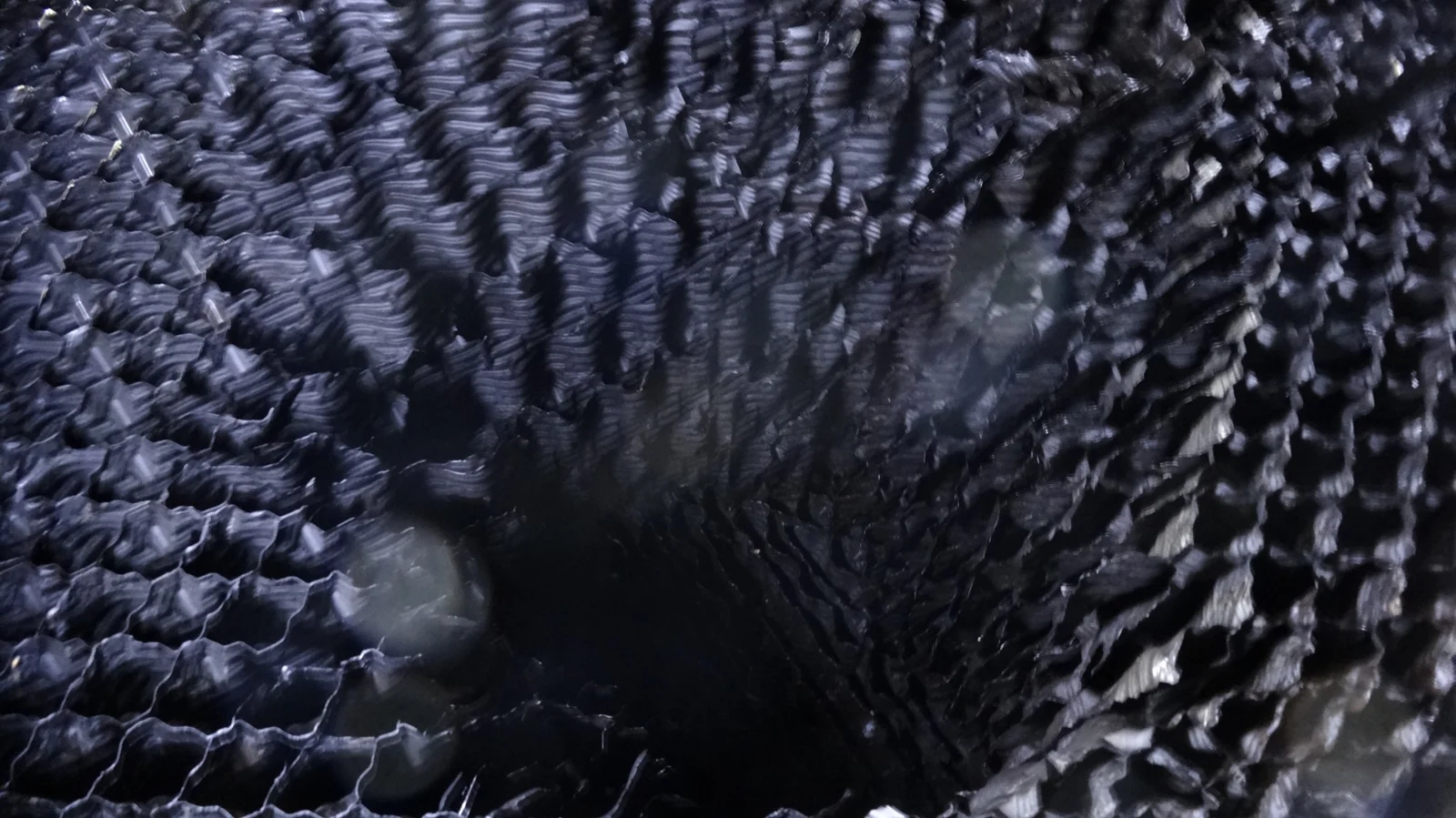
Yes, a missing or failed nozzle can contribute to local fill damage. In a counterflow tower with a pressurised spray system, loss of the intended spray pattern can concentrate water on a small area. Whether the fill tears, deforms or develops an opening depends on the water discharge, fill condition and support arrangement. A photograph alone cannot establish the root cause.
What the spray nozzle does
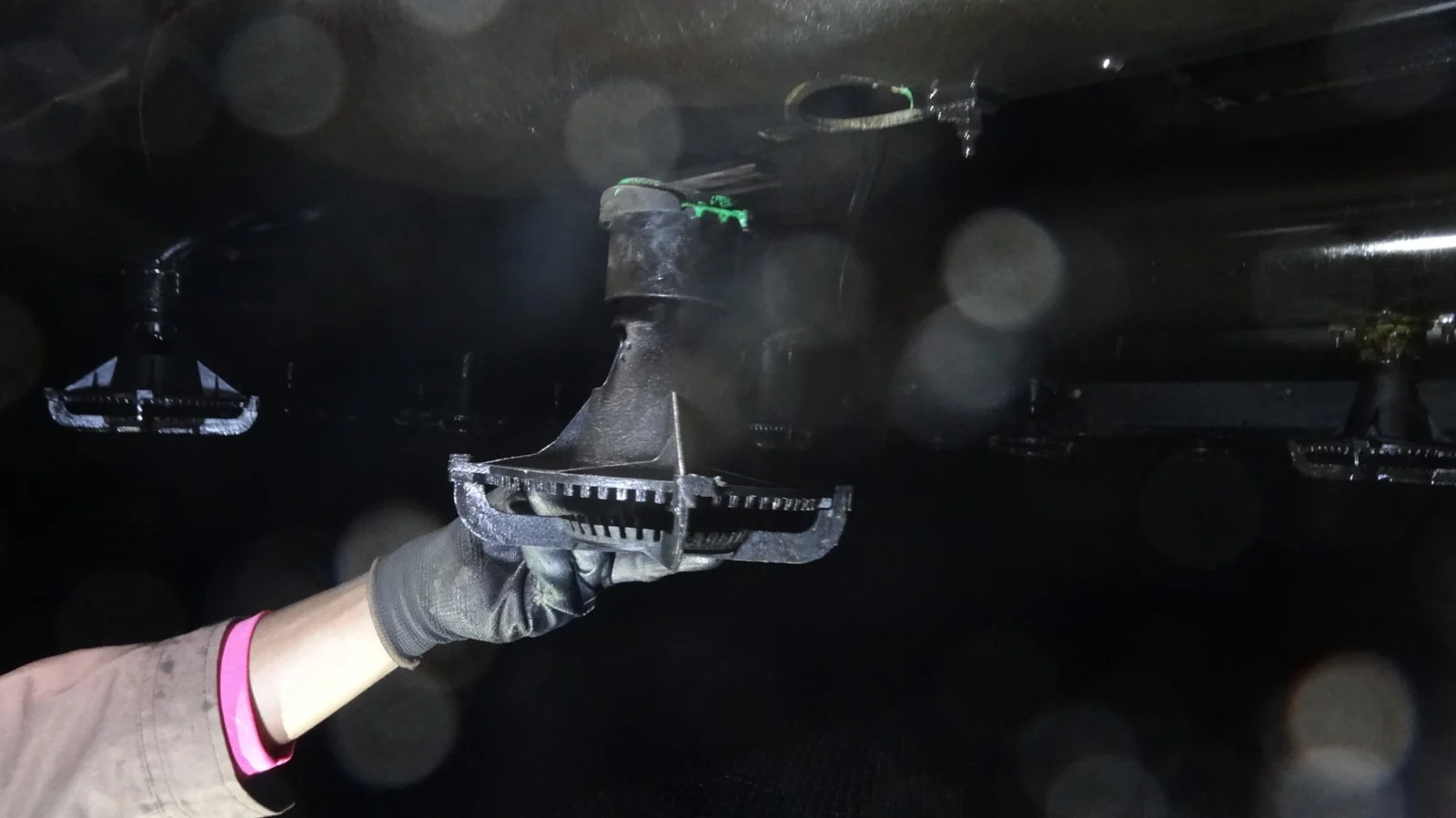
In a counterflow cooling tower, water travels down through the fill while air moves upward. Spray nozzles distribute water over the fill so that the intended heat-transfer area is wetted. A nozzle check should therefore include its connection, body and diffuser components, as well as the water pattern.
What changes when a nozzle comes loose?
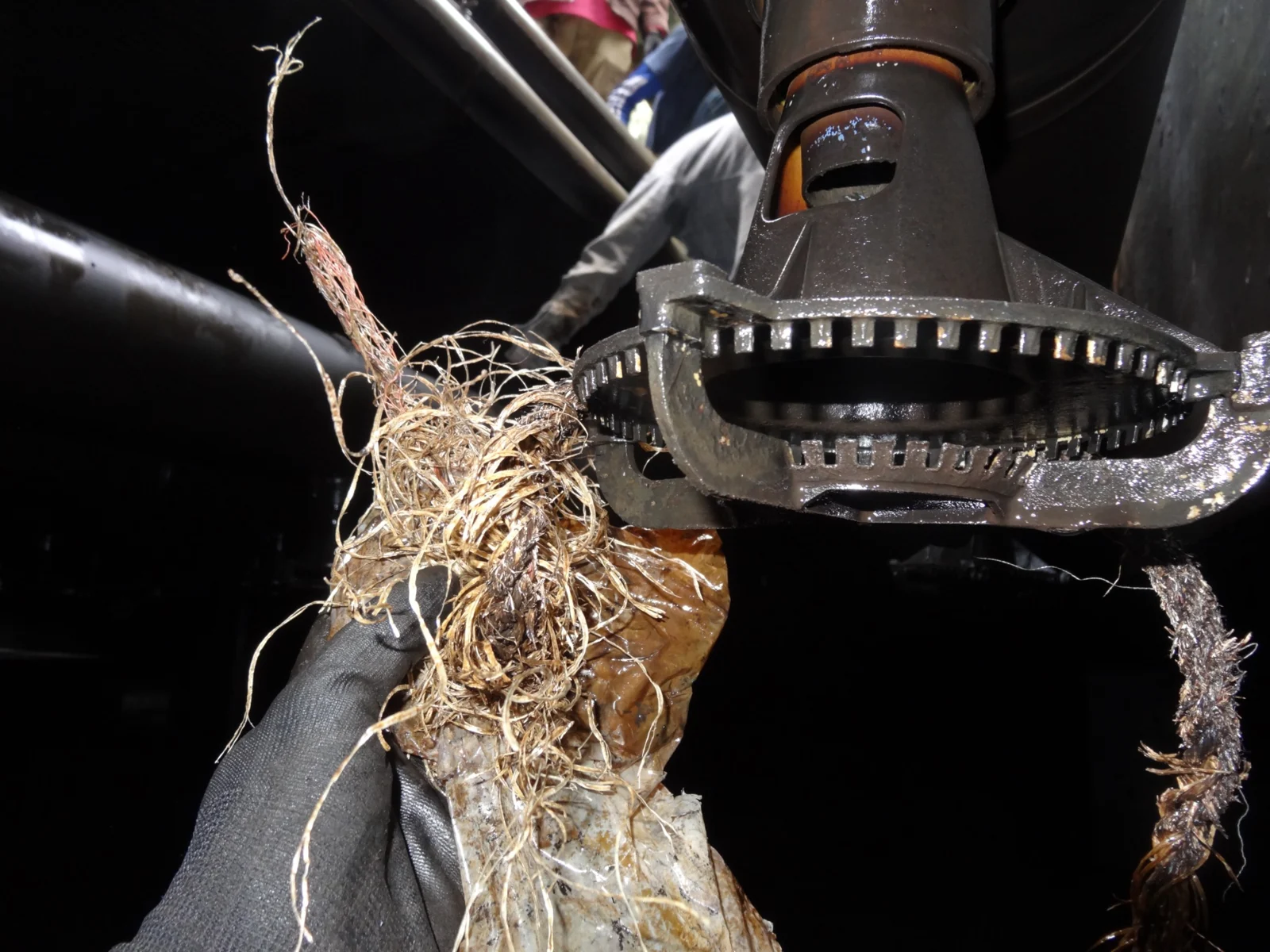
If a nozzle detaches, or its diffuser is damaged, water may leave as a concentrated stream instead of the intended spray. Local loading can increase while neighbouring areas receive less water. The size and direction of that stream depend on the opening and system hydraulics; detachment does not automatically mean higher system pressure.
Engineering interpretation: repeated concentrated discharge can contribute to local deformation or tearing, particularly where film fill is already brittle, softened, fouled or poorly supported. SPX lists missing spray nozzles among operational and maintenance causes of PVC film-fill failures [1]. That supports inspecting both systems together; it does not prove that every hole was caused by a nozzle.
Inspect the cause before replacing the fill
- Map the damage. Record the nozzle position above each affected pack; inspect adjacent sheets and the underside where accessible. Check support spacing and condition.
- Inspect every nozzle in the affected area. Look for missing parts, loose fittings, cracked bodies, worn connections and blockage. Verify the correct model, orientation and spacing against the tower documentation.
- Check the water system. Review flow, pressure at the specified measurement point, branch condition, strainers and recent pump or valve changes. Compare readings with the installed system's requirements.
- Review other contributors. Water temperature, chemical exposure, deposits, fill age and previous cleaning or physical damage may affect the diagnosis.
- Verify after repair. Confirm retention, leaks and spray coverage using the manufacturer's approved test method; document the repaired fill and establish a follow-up inspection.
Plan access safely. Shut down and isolate equipment before entry or hands-on inspection. Any pump-on spray observation needs a controlled procedure with the fan locked out and observation from an approved safe position. Never stand on unprotected fill. Follow the tower manual and site permit requirements.
Local repair or a larger replacement?
A localised defect may justify replacing affected fill packs and correcting the distribution fault. Widespread deterioration, blocked passages or damaged supports may require a larger scope. Replacing fill without correcting the underlying issue leaves the risk of repeat damage. Do not assign a percentage loss of cooling capacity from the photographs; performance assessment requires operating measurements.
Technical references
- SPX Cooling Technologies · Service Contractor Training Workbook · Fill inspections (printed page 290)
- SPX · Cooling Tower Inspection Tips · Spray Nozzles and Fill
- EVAPCO · Operation and Maintenance Instructions · Pressurized Water Distribution Systems
General engineering guidance; use the requirements for your installed tower. The photographs illustrate inspection findings and are not a confirmed failure investigation. No manufacturer affiliation is implied.