
Air path
Check intake obstructions, air bypass, louvers, discharge recirculation and airflow differences by cell. Clear obstructions or correct gaps as indicated.
01 / COOLING TOWER
We source, assemble, install and repair industrial and package cooling towers. If the outlet water gets warmer, the fan vibrates or more water drifts out, we inspect and measure before proposing work.
01 / THERMAL PERFORMANCE
Measure the water temperatures at inlet and outlet, entering wet bulb, circulating water flow, and the operating state and RPM of fans by cell. Record the load and test conditions together.
581.5 kW
Range 5 °C · Approach 5 °C
100 m³/h · Inlet / outlet 37 / 32 °C · Wet Bulb 27 °C
NUVA Field Performance Assessment supports diagnosis under the agreed scope. Formal CTI acceptance testing follows the applicable CTI test code and program requirements, such as ATC-105 where applicable to water cooling towers. CTI product certification is a separate program. CTI Thermal Testing ↗
02 / AIRFLOW & FAN TEST
Measure air velocity across multiple points in a defined plane for each cell. Record point positions, area, method, RPM and measured electrical input (kW), along with the operating state. Use the actual area and method to estimate airflow.
| Cell | Avg. m/s | RPM | Input kW |
|---|---|---|---|
| 01 | 6.0 | 410 | 12.7 |
| 02 | 5.1 | 408 | 12.5 |
| 03 | 5.8 | 411 | 12.6 |
| 4.6 | 4.9 | 5.2 |
| 4.8 | 5.1 | 5.4 |
| 5.0 | 5.3 | 5.6 |
Illustrative 3 × 3 grid. Each number is one sample position.
Airflow helps identify causes and compare fan assemblies. Read it alongside the Thermal Test to see what changed in heat rejection and outlet temperature.
03 / FILL, DE & MECHANICAL INSPECTION
Check intake obstructions, air bypass, louvers, discharge recirculation and airflow differences by cell. Clear obstructions or correct gaps as indicated.
Check water distribution, nozzles or the rotating distributor, deposits and pack deformation. Consider cleaning or replacement of affected fill after inspecting the extent of damage.
Check panel direction, condition and perimeter gaps where air bypasses the eliminator. Reseat or replace damaged panels, and verify drift performance where required.
Review blades, hub, fasteners, belt or shaft, bearings and gearbox as fitted. Correlate vibration readings with RPM. Scope laser shaft alignment or gearbox oil analysis where access and equipment allow.
04 / PM & RETROFIT
Plan PM, drive repairs, fill and eliminator replacement, motor replacement or fan upgrades around the findings and shutdown window.
Set the baseline. Measure supply input kW and check blade pitch, RPM, drive condition and airflow.
Check motor and drive compatibility and compare total input including the VFD at the required duty.
Request OEM fan curves and controller input at the required duty. Check fit, environment, controls and service access.
Compare total electrical input at comparable airflow and pressure. Check leaving-water temperature under comparable heat load, water flow and wet bulb. Use traceable OEM data or measured input kW for any savings claim.
Review layout and connection points, assemble the unit and complete agreed handover checks.
Review existing condition and operating needs to define compatible upgrades.
Inspect internals, structure and drives, then refurbish agreed components.
Check pack dimensions, supports and material compatibility before replacement.
Check the existing layout, support spacing and fit of the replacement panels.
Assess damage to the basin, FRP, supports or other accessible components and agree repairs.
Plan access, lifting and assembly sequence around site constraints.
COOLING TOWER SYSTEMS
Installation, maintenance and upgrades for cooling towers. Internal components, fans, drives and site measurements help define the right scope for your operating conditions.
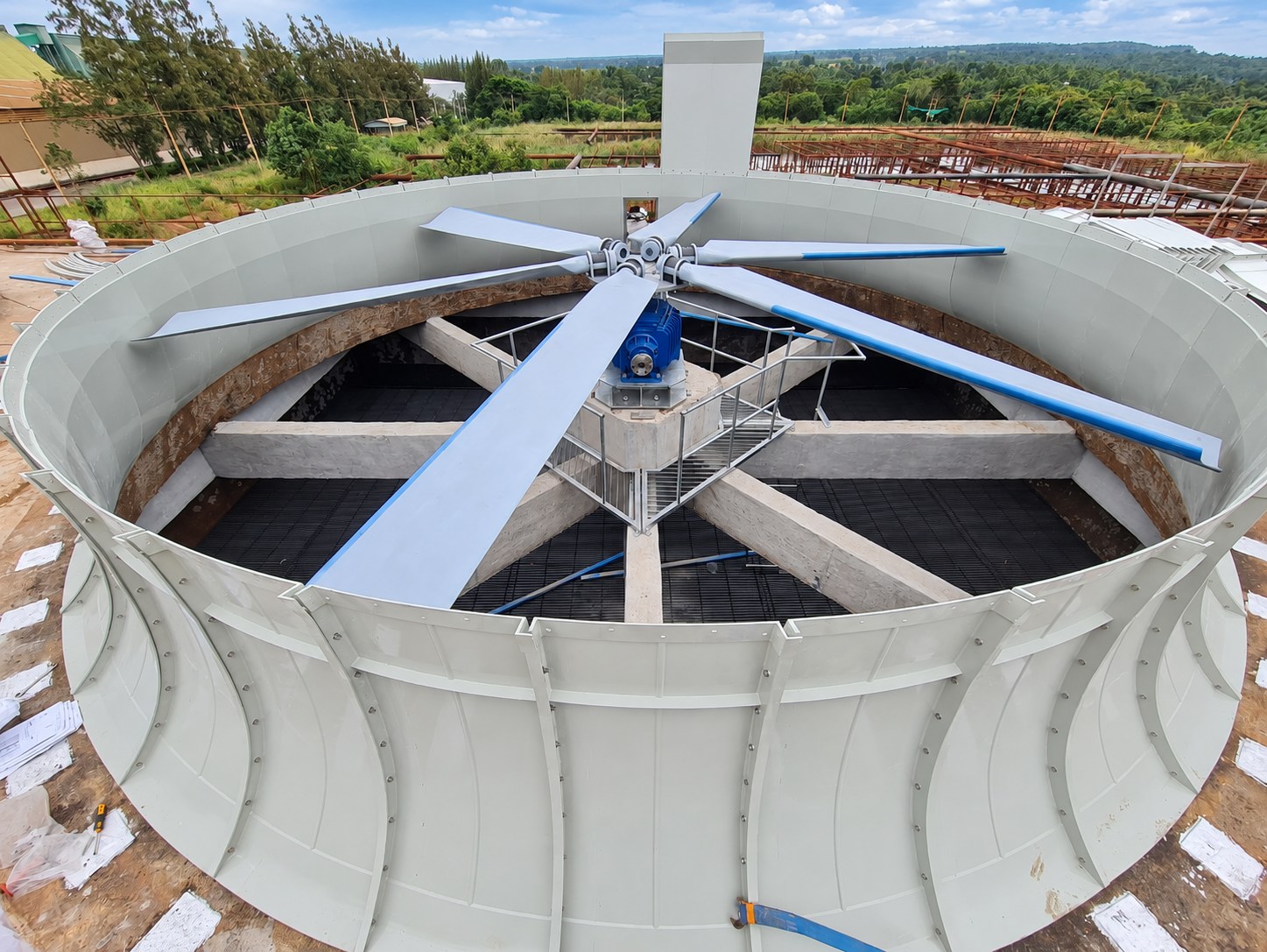
Cooling tower supply, site installation, fan assembly and drive components to agreed drawings and scope.
Replace fill, drift eliminators and nozzles, with structure, basin and FRP repairs based on site findings.
General inspection, thermal performance and airflow testing, with improvement options based on site data.
STRUCTURAL REPAIR & REPLACEMENT
NUVA undertakes surveys, repair planning, component replacement and installation for cooling tower structures, coordinated with mechanical and piping work.
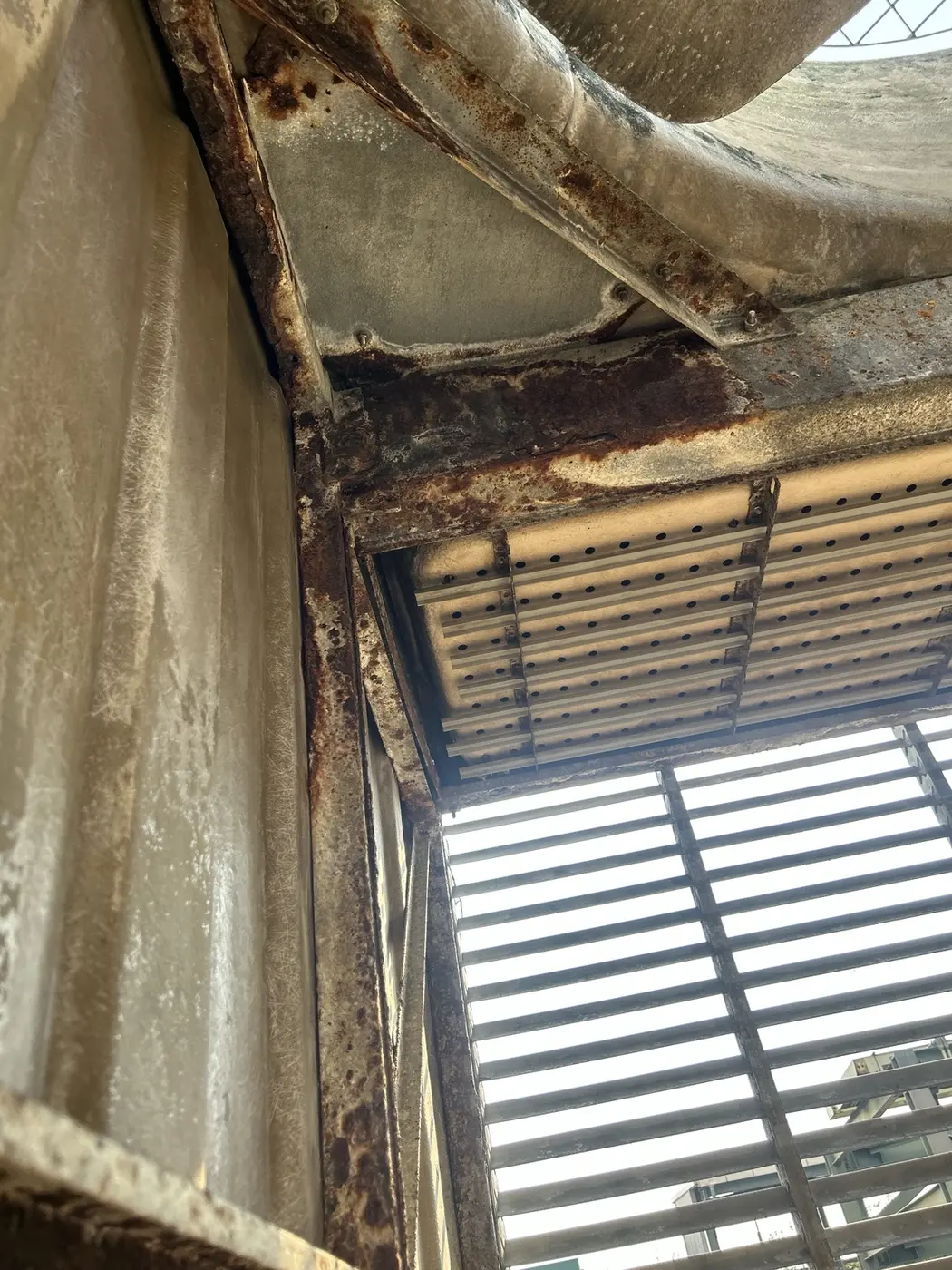
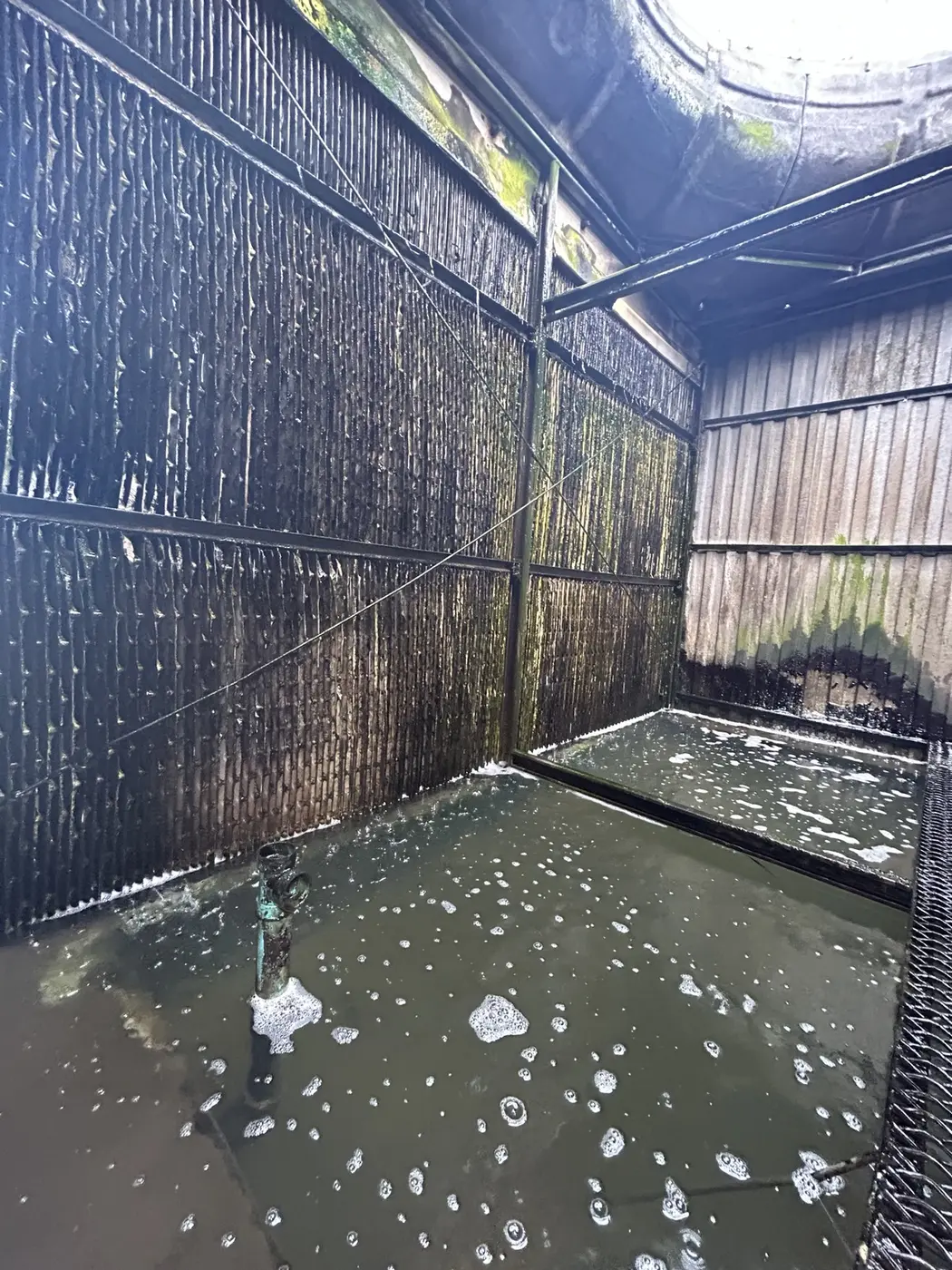
Inspect material loss, connections and foundations. Define local repair or member replacement from the assessment.
Review supports and maintenance access; compare suitable steel or FRP products under an engineering design.
Specify surface preparation and protective coating for suitable repairable members. Plan temporary supports, dismantling and installation around shutdown constraints.
These are existing-condition photos, not completed structural repair examples. Repair scope and material selection require inspection and an engineering assessment. Coating does not restore lost structural section.
Request a structural site survey ↗